
Why Many Vitamin C Serums Fail: Dr. Cho Byeong Gi on pH, Solubility, & Performance for Skin Appearance

Why Many Vitamin C Serums Fail: Dr. Cho Byeong Gi on pH, Solubility, & Performance of Vitamin C for Skin Appearance
Vitamin C is one of the most trusted brightening ingredients in skincare—yet many serums fail to deliver real results. Discoloration, irritation, and lack of visible improvement often come from formulation problems rather than the ingredient itself. In this discussion, cosmetic scientist Dr. Cho Byeong Gi explains how true solubility, proper acidic pH, and the use of pure ascorbic acid determine whether a vitamin C product can actually work.

Dr. Cho Byeong Gi is a renowned Korean cosmetic scientist and R&D leader with more than four decades of experience in skincare research and formulation. He holds a Ph.D. in Chemistry from Pusan National University, an M.S. in Chemistry from KAIST, and a Ph.D. in Food Science and Biotechnology from Kyungnam University.
Throughout his career, Dr. Cho has led research and product innovation for many of Korea’s most influential beauty companies, including:
Head of R&D Center, Amorepacific Corporation (17 years)
Director, Coreana Cosmetics R&D Center (9 years)
Director, Nature Republic R&D Center (3 years)
Director, OMEY R&D Center (4 years)
Director, Jayjun Cosmetic R&D Center (2 years)
Director, The Face Shop R&D Center (5 years)
CEO, Dermstory (2019–Present)
He is recognized for pioneering achievements in Korean skincare, including the development of the world’s first successful stabilized vitamin C formulation and the introduction of Korea’s first cosmetic application of retinol (Vitamin A). His work has helped shape iconic product lines and key technologies now considered foundational in the K-beauty industry.
With this background, Dr. Cho explains why many modern vitamin C serums struggle to deliver real whitening—beginning with the most basic requirement: true solubility.
Why Solubility Determines Absorption
Dr. Cho emphasizes a simple but often overlooked principle: vitamin C must be fully dissolved to interact with the skin. Pure ascorbic acid that remains as powder cannot move through the skin’s surface, no matter how high the labeled percentage may be.
This is why many products feel smooth yet show little brightening over time. Texture and marketing claims do not equal biological availability. True performance depends on whether vitamin C molecules can exist in a form the skin can actually interact with.
Dissolved vs. Undissolved Vitamin C
In effective formulations, vitamin C exists as individual molecules within a controlled acidic solution. These molecules can interact with the outer skin layers and participate in the processes related to brightening. When the ingredient stays as particles suspended in oils or glycols, that interaction is greatly limited.
Practical Implications for Your Skin
A high percentage does not guarantee skin delivery
Powder-based systems offer limited penetration
True efficacy begins with molecular dissolution
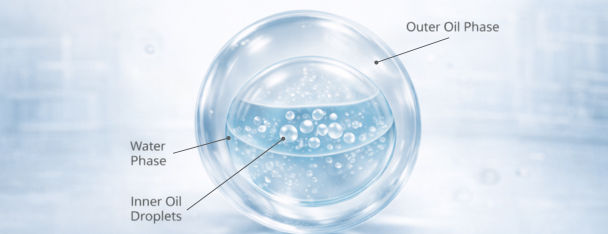
The Vita C 13.5 Ampoule was designed around this principle—using an emulsion system that keeps pure vitamin C in a dissolved, bioavailable state. For users seeking complementary brightening support, the Glutaglow Ampoule works alongside vitamin C pathways rather than replacing them with unstable alternatives.
pH Is More Important Than Percentage
One of the most common misunderstandings in vitamin C skincare is the focus on the number printed on the label, as if a percentage alone could predict results. Shoppers often assume that higher percentages automatically deliver stronger results, but Dr. Cho explains that this misses the most important factor: pH.
For pure vitamin C to work effectively, it must exist in an acidic environment. If the pH is too high, the molecule becomes less active and less able to interact with the skin, regardless of how much of it is in the bottle. In Dr. Cho’s observations, vitamin C behaves quite differently depending on the solvent it’s in:
In water: around pH 2.7
In propylene glycol: about pH 3.1
In glycerin: about pH 3.7
In ethanol: around pH 4.2
As the pH rises, the vitamin C molecule loses its optimal activity. This is why a well-formulated 13.5% vitamin C emulsion at the right acidity can outperform a higher-number serum that hasn’t controlled pH. The skin doesn’t respond to marketing figures — it responds to chemistry.
Dr. Cho also points out that water-free formulas have a particularly hard time achieving the acidic range where vitamin C is most active. Without water as a medium, adjusting pH becomes nearly impossible, and the ingredient stays largely inactive on the surface.This reasoning is reflected in the Vita C 13.5 Super Whitening Ampoule, which is structured to maintain an acidic environment while keeping pure vitamin C in a dissolved state. For users who combine brightening approaches, the Vita C Glutaglow Super Brightening Ampoule is designed to complement—rather than replace—properly balanced pure vitamin C.
These pH differences may appear small on paper, yet they fundamentally change how the molecule behaves on the skin.

Dr. Cho’s measurements show that vitamin C is most active in strongly acidic ranges around pH 2.7–3.1, with efficacy declining as pH rises.
The Limits of Vitamin C Derivatives
Because pure vitamin C is difficult to stabilize, many brands turn to derivatives such as ascorbyl glucoside or magnesium ascorbyl phosphate. These ingredients are often marketed simply as “vitamin C,” yet chemically they are not the same molecule, and they do not behave the same way on the skin.
Dr. Cho explains that for a derivative to deliver real brightening, it must first be converted back into pure ascorbic acid within the skin. That extra step is where things can break down. Current research offers only limited and often inconsistent evidence that this conversion occurs efficiently in everyday use.
From a biological standpoint, the skin would need enzymes or microorganisms capable of breaking a derivative down into active vitamin C. According to Dr. Cho, reliable proof of this process remains insufficient, which helps explain why many derivative-based products produce weaker results than people expect.
Are All Derivatives Ineffective?
Among the numerous alternatives, Dr. Cho notes that 3-O-Ethyl Ascorbic Acid shows at least some measurable activity. Even so, he estimates that its performance reaches only about five percent of what properly formulated pure vitamin C can deliver.
In practical terms, this means a derivative product may look stable and feel gentle, yet still deliver only a fraction of the brightening response users associate with true vitamin C. The difference is not about good or bad ingredients, but about realistic expectations of what each form can accomplish.
This is why many formulas that rely solely on derivatives can be pleasant to use, but struggle to create meaningful changes in tone or clarity over time. Stability on the shelf is valuable—but stability without strong bioactivity has real limits.
What Happens to Real Products Over Time
Laboratory theory is one thing. What happens inside a bottle on a bathroom shelf is another. Dr. Cho describes how many well-known vitamin C products look promising at first, only to change dramatically within days.
In his evaluations, some serums began to discolor after just three days at elevated temperature. Along with the color shift came a noticeable change in odor and a measurable drop in potency. To a consumer, these signs often appear gradually, but they point to the same underlying issue: the vitamin C molecule is breaking down long before it reaches the skin.
Manufacturers sometimes try to hide this instability by blending vitamin C with other popular ingredients, such as glutathione. The idea sounds logical—combine two brightening actives and create a stronger product—but Dr. Cho notes that mixing components does not solve the chemistry problem. If vitamin C is not properly stabilized, the addition of another ingredient cannot prevent oxidation or loss of activity.
There is also a difference between how a product looks and how it performs. Some formulas use silicone oils or optical tricks to appear clearer and more elegant, yet these adjustments can improve appearance without improving efficacy. A serum may feel luxurious and photograph beautifully while still delivering very little active vitamin C to the skin.
Dr. Cho’s point is not that every product on the market is ineffective, but that visible qualities—color, texture, or immediate sensation—are poor indicators of long-term performance. Real effectiveness depends on whether the vitamin C remains chemically intact and bioavailable from the first application to the last.
This leads to the practical question most people care about: what should a well-designed vitamin C formula actually look like?

31-day comparison highlighting the Uni&Core Dermstory sample alongside other commercial vitamin C products.
What Makes a Well-Designed Vitamin C Formula
After years of testing different approaches, Dr. Cho returns to a few practical principles that determine whether a vitamin C product has a real chance of working. The first is structure: a formula needs a system that can hold pure ascorbic acid in a dissolved, stable state rather than suspending it as particles. Without that foundation, other improvements become cosmetic rather than functional.
The second principle is balance. Effective products do not rely on a single trick—whether high percentage, exotic solvents, or eye-catching textures—but on the interaction between pH, solubility, and delivery. When those elements are aligned, vitamin C can remain active from the moment the bottle is opened to the final application.
Dr. Cho also highlights the importance of user experience in a different sense. A serum should feel comfortable enough for consistent use, yet gentleness alone is not enough. The challenge is to create a formula that respects the skin while still maintaining the acidic environment that pure vitamin C requires.
Hydration plays a role as well. Many products on the market contain relatively low moisture content, which can limit how evenly vitamin C is distributed across the skin. An emulsion with both water- and oil-soluble components can help the molecule spread more uniformly and interact with the outer layers rather than sitting unevenly in isolated patches.
In Dr. Cho’s view, a well-designed vitamin C product is less about dramatic claims and more about quiet consistency: a formula that stays chemically intact, feels stable from day to day, and supports gradual, visible improvement instead of overnight promises.
Choosing a Vitamin C Product: What to Look For
After hearing Dr. Cho’s explanations, the decision becomes less about chasing the highest percentage and more about understanding how a formula actually works. A label can be persuasive, but it cannot reveal whether the vitamin C inside is truly active.
Questions Worth Asking
Is the formula built to keep pure vitamin C dissolved rather than suspended as a powder?
Does the product maintain an acidic pH where vitamin C remains biologically active?
Has stability been addressed beyond surface appearance?
Is the texture designed for consistent, comfortable daily use?
These considerations help separate products that look impressive on paper from those that can perform on real skin. Dr. Cho’s message is ultimately practical: effectiveness is not a single feature but the result of many small decisions working together.
For readers who want to see these principles applied in a finished product, Uni&Core offers two formulations built around this approach. The Vita C 13.5 Super Whitening Ampoule centers on pure ascorbic acid within an emulsion system designed to maintain the proper acidic environment and solubility. The Vita C Glutaglow Super Brightening Ampoule is positioned as a complementary step, supporting overall tone and radiance rather than replacing active vitamin C.
Whatever product a person chooses, Dr. Cho encourages looking past marketing language and paying attention to the fundamentals: pH, true solubility, and long-term stability. Those quiet details, more than any bold number on a label, determine whether vitamin C can do what it promises.



Comments